Dewatering for Marine Retaining Walls: Installing Novum Wall in Water
Avg. Read Time: 4 min, 25 sec
Short on time? Here are this article’s key takeaways…
Dewatering sets the stage for success. Removing or controlling groundwater is essential to create a dry, stable base for marine retaining walls like Novum Wall.
Engineer involvement is non-negotiable. A local geotechnical engineer should design the dewatering plan to match site conditions and protect long-term wall performance.
Safe, precise installation depends on it. Proper dewatering allows crews to align blocks accurately, stabilize soils, and work efficiently without water disruptions.
Novum Wall is built for water challenges. Its wet-cast concrete composition, natural textures, and manageable block size deliver strength, durability, and visual appeal in waterfront projects.
Any construction involving water brings unique challenges. Protecting property and infrastructure along rivers, channels, streams, lakes, or stormwater systems requires a durable retaining wall solution like Novum Wall. One critical step when installing a marine retaining wall often determines long-term success before the first block is set: site dewatering.
An important note: consulting an engineer on any retaining wall project is always a good idea, but it should be considered non-negotiable when the project may encounter water. Anytime water is present – or even suspected – on a project site, a local engineer should be engaged to evaluate risks, design needs, and compliance requirements. Dewatering is a complex process with numerous site-specific variables and implications. This article seeks to broadly explain dewatering and how it can be used to install a solution like Novum Wall in a wet or submerged site. It should not be considered a step-by-step instruction guide to prepare wet sites for wall installations.
What is Dewatering?
Dewatering is the process of removing or controlling groundwater and surface water from a construction site to create a stable, dry work zone. By lowering the water table or redirecting flows, contractors can:
- Prevent water from undermining excavations and foundations
- Improve soil stability and compaction for retaining wall bases
- Allow heavy equipment and crews to work safely and efficiently
- Protect the long-term integrity of installed structures Dewatering is essential in marine applications because it ensures that retaining wall systems like Novum Wall are built on a reliable foundation, free from water disruption.
Who Should Develop Your Project’s Dewatering Plan
A local geotechnical engineer should lead the creation of a dewatering plan. They bring the specialized expertise needed to understand how soil, water, and structure interact. Unlike general contractors or even structural engineers, geotechnical engineers evaluate subsurface conditions in detail, identifying groundwater levels, soil permeability, and the potential impact of water pressure on excavation and retaining wall stability.
By leading the plan, the geotechnical engineer ensures that the right dewatering method is matched to the site’s unique conditions. This reduces risks like soil instability, construction delays, or structural compromise. In short, having a geotechnical engineer at the helm transforms dewatering from a reactive measure into a proactive strategy that safeguards both the construction process and the long-term performance of the retaining wall.
Learn why you should always consider hiring an engineer for your Novum Wall project.
Why Dewatering Matters for Marine Retaining Walls
Construction near water is always complex. High water tables, soft soils, and unpredictable storms can quickly overwhelm a jobsite if not adequately managed. Dewatering creates the conditions contractors need to:
- Stabilize soils to provide reliable foundations for marine retaining walls
- Establish a dry, workable zone in areas with fluctuations or standing water
- Ensure proper alignment of Novum Wall blocks during installation
- Protect long-term performance against settlement, washout, or premature failure
Without effective dewatering, marine retaining walls face structural risks, and installation crews face unnecessary and sometimes unsafe construction challenges.
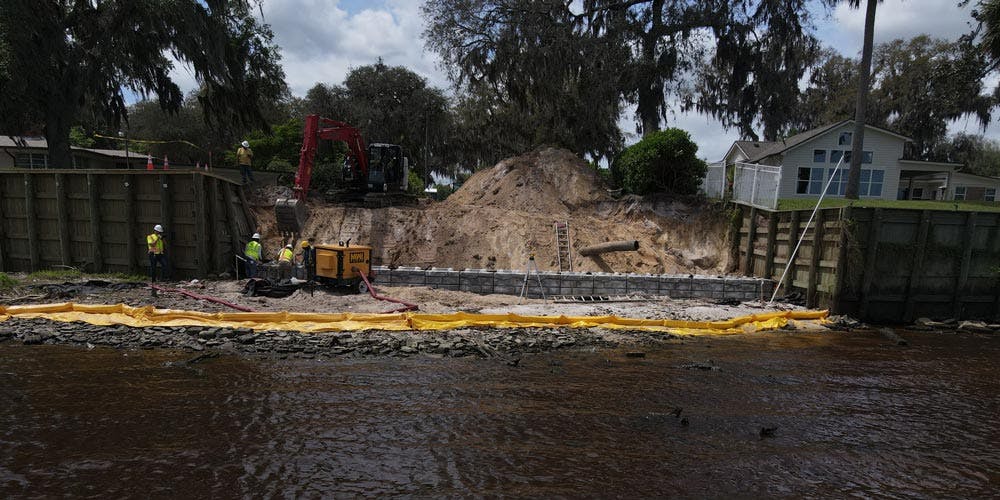
Common Dewatering Methods
Depending on specific site conditions and demands, engineers and contractors can choose to pursue several approaches when preparing the site for marine retaining wall installation:
- Cofferdams for Rivers, Streams, and Lakes Sheet pile or inflatable cofferdams isolate the construction zone so water can be pumped out.
- Wellpoints and Sumps for Porous Soils Wellpoint systems lower the water table while sump pumps manage seepage, ensuring a stable base for Novum Wall installation.
- Bypass Pumping for Flow Management When construction occurs near drainage channels or outfalls, bypass systems maintain water flow while creating a safe work zone.
- Sediment Control for Environmental Protection Filter fabrics, erosion control measures, and compliance strategies safeguard surrounding waterways during construction.
An engineer should always design or approve the selected dewatering plan to account for soil type, water pressure, environmental impacts, and other factors.
See how a Kentucky homeowner used Novum Wall to control water and combat erosion after heavy rains threatened their driveway and streambank.
Marine Retaining Wall Installation After Dewatering
Installation can confidently move forward once the site is stabilized and dewatered. After the site is prepared, crews can rely on familiar Novum Wall installation steps to construct a wall offering stability and performance. A typical Novum Wall installation in a wet site might include:
- Excavation and Subgrade Preparation – Proper compaction and grading provide a solid base.
- Base Installation – A granular leveling pad is placed to support Novum Wall blocks.
- Placement of Units – Precision installation is possible because water isn’t disrupting the foundation.
- Backfill and Reinforcement – Free-draining aggregate and specified reinforcement elements like geogrid are added per design.
- System Removal – After securing the marine retaining wall, cofferdams or pumping systems are dismantled, restoring natural water flow
For additional installation information, view Novum Wall's installation resources.
Why Choose Novum Wall for Marine Retaining Walls
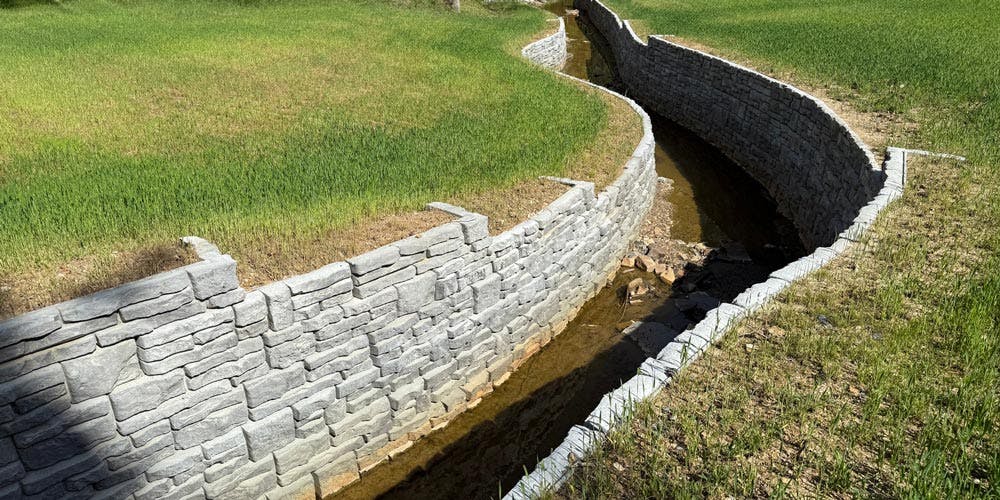
Novum Wall combines strength, adaptability, and ease of installation, making it a reliable solution for most marine and shoreline applications. Backed by engineered designs and efficient construction methods, contractors can deliver walls that withstand water forces while maintaining speed and quality in the field.
Novum Wall offers several unique characteristics that make it an excellent choice for water applications:
- Wet cast concrete’s reduced porosity prevents water from entering the blocks, ensuring a significantly longer lifespan than dry cast alternatives, especially in submerged applications.
- Deeply grooved natural face textures add beauty to the project, but also break up and minimize significant wave action.
- Manageable block size allows for installation with sub-compact machinery in tough-to-access spaces often found in waterfront projects.
Installing a marine wall at your waterfront residence? Learn why you should consider Novum Wall for your next lake wall.
Dewatering isn’t just another step in the process; it’s the groundwork that makes retaining wall construction possible, especially in marine and waterfront environments. By controlling groundwater and creating a stable work zone, contractors can ensure precision, efficiency, and safety during installation. That stability becomes the platform for Novum Wall, a proven system engineered to provide shoreline stabilization, flood protection, and long-term infrastructure resilience.